
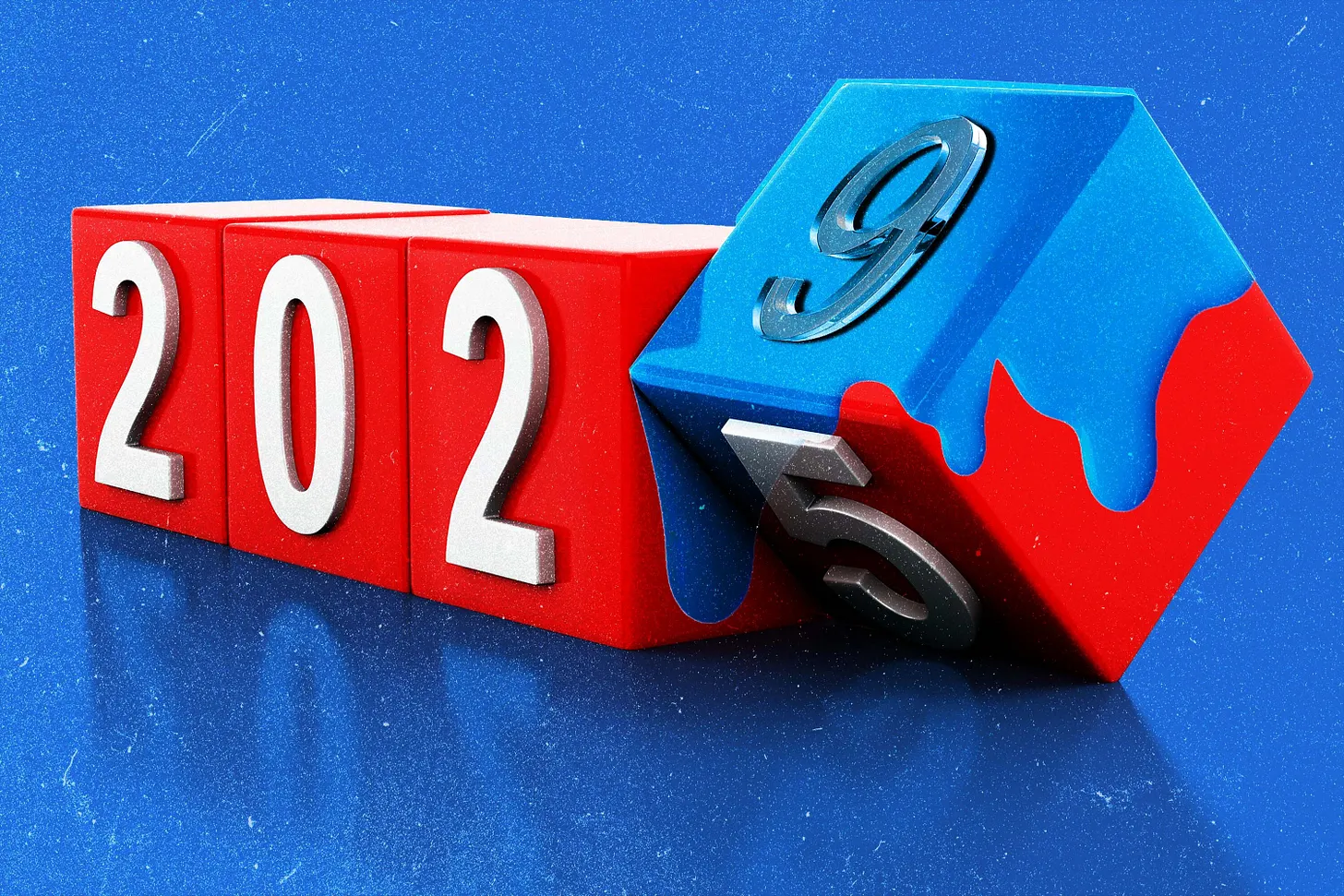
The Bulwark: A First Look at Project 2029
Lifting the curtain on the first set of Project 2029 ideas.
Lifting the curtain on the first set of Project 2029 ideas
For nearly a year, Project 2029 has been bringing together hundreds of America’s top policy thinkers to develop new, big ideas that can be part of the governing agenda for this country’s next bright chapter – and yesterday we gave The Bulwark a sneak peek at some of what we’re working on.
As The Bulwark wrote:
The Democratic policy group Project 2029 is releasing an initial set of proposals in hopes of shaping the fast-approaching presidential primary campaign and guiding leaders on how they might earn back voter trust. It plans to roll out dozens of more ideas on domestic and foreign policy over the next year, all of which the group eventually intends to turn into a book that will be published as a sort of governing blueprint for Democrats….“It’s very clear for many people what Democrats are against,” said Chad Maisel, Project 2029’s executive director. “What people are not clear on is what we are for and what we would do if and when we have our next governing moment. We see Project 2029 as answering that question of: What would we do? What would we fight for? How would we solve problems?”
Think of these first set of ideas as an appetizer; a taste of what’s to come. We picked them not because they cover the landscape of all the major concerns America is facing, but because they illustrate the kinds of approaches we’ll be taking in the lead-up to the release of the full Project 2029 agenda next year.
Our Advisory Board member Justin Wolfers (check out his new Platypus Economics) put it well:
“If there’s a really big library shelf full of a bunch of good ideas, and you just pluck the right one off the right shelf at the right moment, that can be really powerful—that can help government be more effective,” said Justin Wolfers, an economist on the advisory board for Project 2029. “Lots of people have different views, but I do know everyone agrees that on January 20 you have to do something.”
This first set of ideas speak to how we can lower costs for families in areas like child care and energy, create new jobs and drive innovation, fight climate change and power the American economy, give parents new support to raise their kids and raise education levels, and protect consumers from bad business practices that prey on our money and time. They are specific, new, and different.
Of course, these are only the first four of many dozens of ideas. There’s plenty that’s not there but still to come from health care to immigration, taxes to national security, AI to the epidemic of loneliness.
We’ll be rolling out the details on these first few ideas in the coming weeks, but here is the preview we shared with The Bulwark:
Utility Monopolies: America’s electric grid still runs on a century-old monopoly model that leaves 150 million households with no choice in who provides their power and tens of billions of dollars in potential savings locked behind outdated laws. Our proposal outlines how the next President should break these monopolies open, letting competition drive down bills, speed up delivery, and unleash a new wave of cleaner, cheaper energy for families and businesses.
Child Care: Families today are caught in the “Child Care Catch-22.” With child care costs taking up nearly 10 to 20 percent of the average family’s already stretched take-home pay, families can’t afford to pay for child care while they work. And because parents with young kids are managing other costs like saving for a home or paying student debt, many can’t afford to stay home and not work. Our proposal outlines how the next President can ensure that every family has the time, financial support, and high-quality care options they want, giving parents back the power of choice on how to support their young children.
Kids Over Clicks: Parents today are raising kids in a digital environment engineered to hook them and the consequences, from a worsening youth mental health crisis to a new wave of harm from AI chatbots, are no longer in dispute. Just as America sets minimum ages for drinking and gambling, it’s time to set real guardrails around the products targeting kids online. Our proposal would protect children from the most harmful features of social media and AI, give parents stronger tools, and dismantle the surveillance advertising model that drives much of the harm.
The Annoyance Economy: Americans are losing enormous amounts of time, money, and patience to the small, daily hassles corporations deliberately design into modern life: spam calls, useless chatbots, surprise fees, impossible cancellations, endless paperwork. The hassle isn’t a bug; it’s the business model, and it costs households well over a hundred billion dollars a year. Our proposal would take on the “Annoyance Economy” directly, restoring basic fairness and common sense to the everyday transactions that shape how Americans experience the economy.
Not everyone will agree with all of the ideas in the Project 2029 vision. We’re not looking for consensus. After all, a credible agenda means making choices and accepting tradeoffs. And if you’re searching for a party where everyone marches in lockstop, the Democrats are not your best bet.
But here’s what we know: We need a big debate about what we stand for. The status quo hasn’t worked. And saying “no” to Trumpism isn’t enough.
As The Bulwark wrote:
Those involved with Project 2029 stress that voters are desperate for Democrats to present a vision that goes beyond opposition to Trump and offer something positive. As they see it, the greater risk is not having debates about policy priorities at all.